
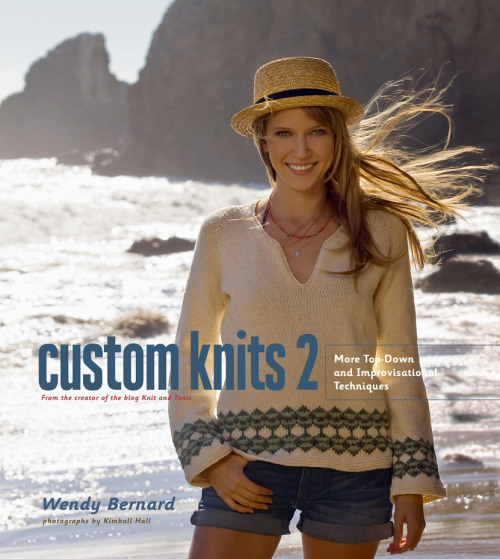
A month or so ago, my editor for the Custom Knits series, Liana, asked me if I would want to write a guest post for the STC Craft blog. We went back and forth on what I should write about, such as my experiences writing Custom Knits 2, or what it’s like knitting for my family, but nothing was feeling especially inspiring to me. That is until she finally said I could write about any old thing, even Beverly Hills 90210, if I wanted to. I’m not sure if she was joking, but I figured I might as well take her up on it, and actually 90210 does have something to do with how I write books. Truth is, I average two hours of the stuff a day when I’m writing a book and I’m not lying. (Believe it or not, I’m sort of proud of it, because at this point I’m an expert. I can look up at the TV, glance at Donna’s hair color, and know right off the bat what season it is.) 90210 keeps things interesting for me when I’m sitting in my office knitting or writing. In fact, as I type this out, Donna’s hair is short and blonde and that means she’s in the early part of her college career and her boyfriend’s name is Ray.
But what else does knitting have to do with 90210? Well, it is (obviously) set in Southern California, which is where I also happen to live, and living where I do is part of the reason why I started to customize my knits in the first place. You see, it’s almost always warm here, so if you’re knitting, you’re not usually knitting for warmth. When I started knitting and wanted to make sweaters, I always had to change things around in the original pattern in order to suit my climate. And this is what gave me the opportunity to start honing my design chops.
When I was a kid, my family lived in Minnesota, and my grandmothers--both of them knitters--would knit mittens for me. But when I moved to Southern California in the late 70’s, I noticed that the only people who seriously wore knits were wearing them for an hour or two, or in a super-cold office, or for pure fashion, and not usually out of necessity. As ironic as it may seem, it was in Southern California that I eventually found my favorite thing to do—knit and design and write books about it—yet I couldn’t experience what it was like to actually “use” the knits the way they were originally intended: for warmth.
So imagine how it has been for me to fall into a career and a passion that has so many environmental constraints! If I want to knit for myself, I absolutely have to consider my surroundings. Does it make sense to knit a cardigan that takes me weeks to knit and only be able to wear it for a few days in a season? Nope. What about a pullover? Does it make sense to spend a month knitting a pullover with the nicest alpaca I can find so I can wear it for, oh, two hours? No. No. No. But you know what? If I slapped short sleeves onto the cardigan instead of the long ones, I might be able to wear it. And the pullover? Same thing: Shorten the sleeves, add a deeper neckline to allow a colorful tank to show through, and I’m set. The alpaca part? I’d probably still knit with alpaca—some of my favorite yarns have alpaca—but I’d probably try to find a blend or something in a sport weight.
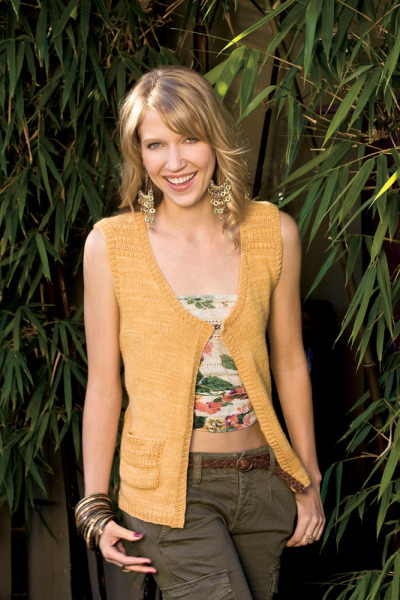
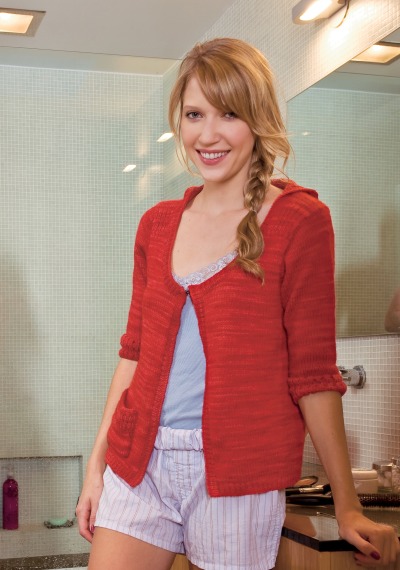
When I think back on how I naturally approached knitting when I first started designing, I realize that my personal limitations and point of view actually worked in my favor. I knew that people living in colder climates might want to wear warm items with long sleeves or cowl necks and spend the time knitting them, but I also discovered that people like me–who live in areas where there are fewer knit-wearing opportunities–might also like to knit them and wear them, and so I started to think about variations. The Knotted pattern from Custom Knits 2 (shown above) is a perfect example of the same sweater pattern being put to use for people living in different climates. If you live in a warmer place, like me, then you can knit the vest version of the pattern (in yellow, above) as is. But if you live in a cooler climate, you may want to add long sleeves and a hood to the pattern (in red, above)--which are both things I show you how to do in the book. And this has been the way that I have approached the Custom Knits series: I encourage you to look at a pattern and make adjustments so that the garment works in all areas—perfect for your climate, body shape, and personal preferences--and customize it so that you will actually get to wear it (and want to wear it).
For Custom Knits 2, I even went a step further with the customizing, this time including answers to all of the questions I have received in recent years about more advanced customizing techniques. For example, I have heard from knitters all over the world who would like to make a child’s pattern in a woman’s size (or vice versa), and in this book, I show you how. Many, many people have also asked how they can customize a raglan—one of the trickier sweater styles to customize--so I addressed that question in the book, too. In fact, the Zuma Tunic (shown above on the cover) is a raglan, and there are all sorts of ideas for customizing this pattern in the book.
So whether you’re living in 90210 or in 10011 (that’s the zip code for STC Craft), the key to successful sweater-making is understanding what works for you and how to make changes to existing patterns so that you end up with a beautiful garment that you can actually wear and love. Speaking of making garments you'll love, why not try your hand at making one of the patterns in Custom Knits 2 along with a helpful, inspiring group of other knitters? Next week, I'll be kicking off a Custom Knits 2 knitalong where knitters from all over the country will create garments from the book (and most likely customize them to their heart's content). Be sure to join the Knit and Tonic Knitters Group at Ravelry.com for announcements and updates, and check out my blog, Knit and Tonic, for more information.